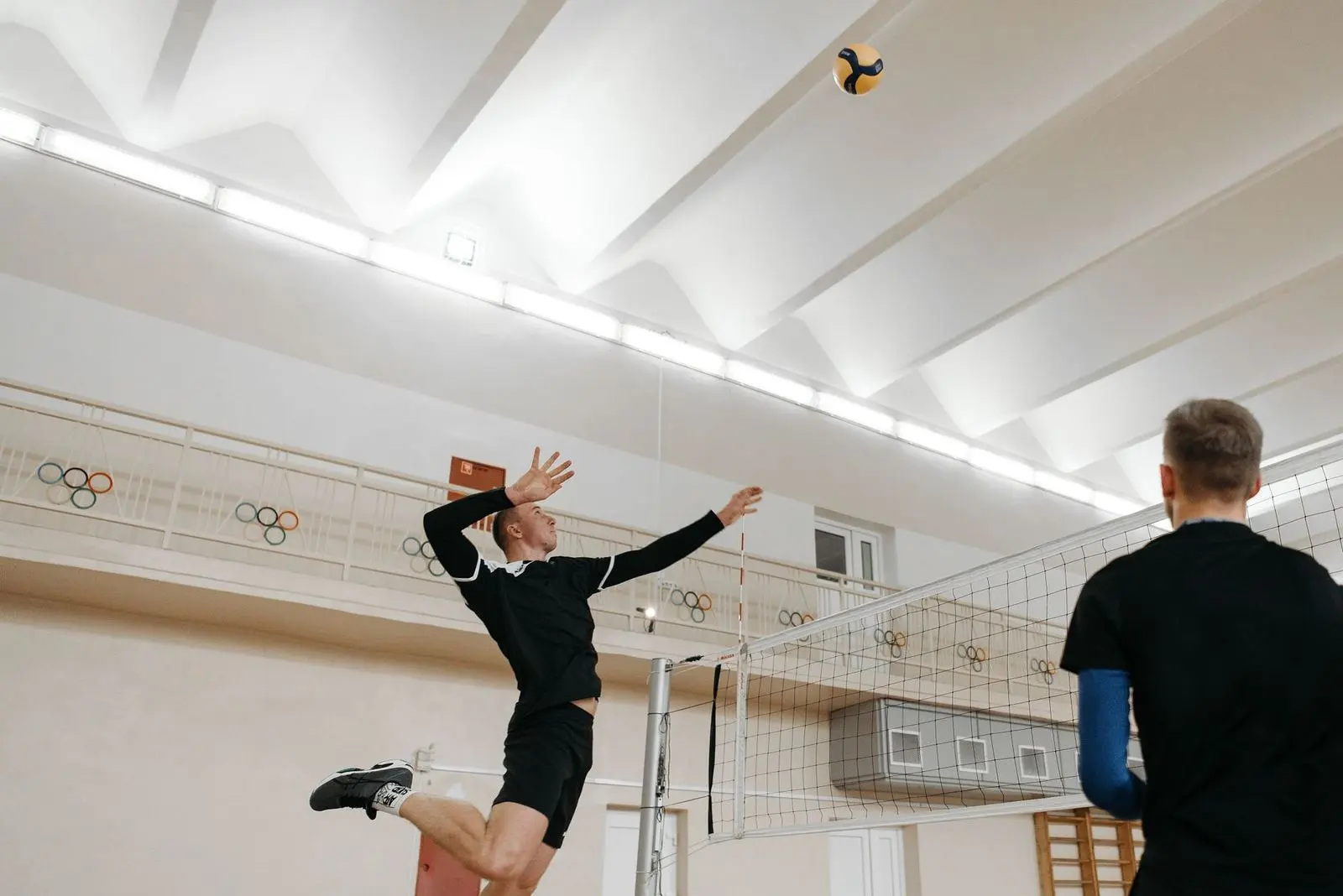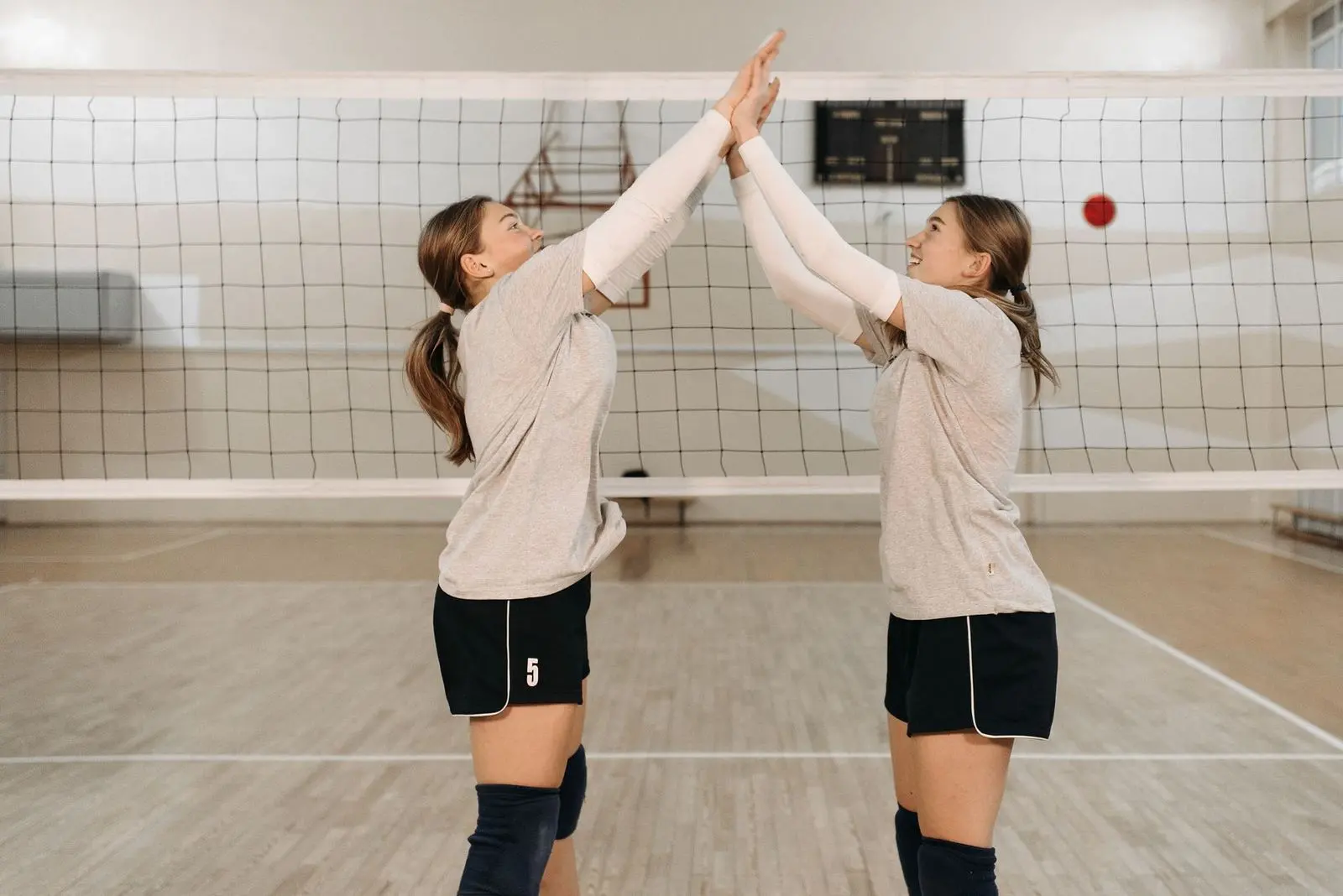
Watching a rally and wondering what does a setter do in volleyball? The setter takes the second touch and puts the ball where a hitter can score, running the offense like a quarterback.
You can meet the other roles on court in our collection of volleyball player profiles.
| Item | Value |
|---|---|
| Share of a team’s ball contacts | Close to one-third |
| Touch in the usual sequence | Second touch |
| Most common comparison | Quarterback or point guard |
| Rows a setter can play | Front row and back row |
| Skill order to build | Good first, smart second, then occasionally tricky |
These figures come from USA Volleyball’s “Thoughts for Setters” and a DICK’S Sporting Goods positions guide. Coaching pages get revised, so check the sources before you rely on them.
The setter’s job in a rally
A setter aims to receive the second touch and set it for an attacking player, according to the DICK’S Sporting Goods guide. USA Volleyball’s article puts it simply: between the pass and the attack, the setter is in control.
The job starts before the ball is even in play. CoachUp describes the setter as the player who keeps order on the court, from calling the play to making sure everybody is lined up correctly.
In practice, a setter’s rally looks like this:
- Call the play and make sure teammates are lined up before the serve is received.
- Move to the ball after the pass or dig and deliver a set the hitter can attack.
- Pick out the opponent’s blockers and look for the weakest one.
- Block, dig and receive serve when the rotation puts the setter in the front or back row.
The last two points come from the DICK’S guide, which says a setter should identify the opponent’s blockers and single out the weakest, and notes that setters can play in either row.

Why the setter matters so much
Volleyball makes it hard for one player to dominate, yet the setter carries outsized weight. USA Volleyball’s article, built on thoughts from Doug Beal, coach of the 1984 U.S. Olympic Men’s Team, says setters come close to making one-third of all the ball contacts by a team.
That share matters because of where the contact falls. The same article says the setter makes or breaks the hitters, builds or destroys confidence in the passers, and sets the tempo and rhythm of the offense.
Coaching guides echo the point in plainer terms. CoachUp calls the setter one of the most important athletes in volleyball and says most teams will be dead in the water without one.
The quarterback comparison is the one you will hear most. CoachUp adds the point guard in basketball, since setters can score but mainly set up teammates.
What skills and traits does a setter need?
USA Volleyball’s article lists four traits a setter should have and develop. Each one is mental as much as physical:
- Intelligence: reading the coach’s wishes on the floor, deciding fast and perceiving the game as a whole.
- Self-confidence: believing you can deliver the required set and get to every ball.
- The “sponge” mindset: accepting responsibility for hitting mistakes and asking hitters for feedback.
- Emotional stability: avoiding dramatic highs and lows that could spread through the team.
The wording behind that list is in the USA Volleyball piece, which says a setter must be very stable and should seek feedback from hitters to give them exactly what they want.
Preparation counts too. CoachUp argues that elite setters prepare mentally before each serve, so consistency becomes their most important factor in execution, and it suggests building a routine for your feet, arms, shoulders and head.
Size is not the gatekeeper. USA Volleyball says that whatever their size, setters must understand their role and work with the coach on setting choices, as the same article explains. The leadership side matters as well: CoachUp says setters must be natural-born leaders who are unafraid to communicate.
Good first, smart second, tricky last
The USA Volleyball article gives a clear order for building the craft. It advises setters to be good (technically perfect) first, smart (perceptive) second and then occasionally tricky.
- Be good. Deliver a set that is truly hittable, one that gives the attacker the best chance to succeed.
- Be smart. Once the technical side is mastered, match teammates’ strengths to the opponent’s weaknesses and feed the hot attacker.
- Be tricky. Use deception to disorganize the block, but only after the first two are secure.
The final step comes with a warning from the same source: a tricky set that fools the block but is not hittable is worthless. Setters are told to stay within their abilities during matches and to build new skills in practice.
The article also calls setting a percentage skill that, with practice, can lead to a minimum number of errors in the offense. It urges setters to go for every ball they can and extend their limits.
How the setter fits with other positions
A setter works hand in hand with every attacker. The DICK’S guide says the opposite hitter must be ready to set the ball if the setter cannot, which makes that player the usual backup.
The back-row specialist is a different animal. CoachUp says the libero must not attack and is generally limited to digging and diving, while the setter’s focus is ball-handling and creating offense.
If you want the full lineup, our guide to volleyball positions explained walks through every spot. For the defensive counterpart, there is a separate piece on what does a libero do in volleyball.
Frequently asked questions
Does a setter play only in the front row?
Show answer
No. A setter rotates through both rows, so defensive skills matter as much as work at the net. The DICK’S positions guide lists blocking, digging and receiving serve among the setter’s duties.
Why do people call the setter the quarterback?
Show answer
Both players run the offense and choose who gets the ball. The DICK’S guide calls the position essentially the quarterback or point guard of the team.
What should a young setter practice first?
Show answer
Start with clean, repeatable ball-handling, because a hittable set comes before anything fancy. Then add reading blockers and hitters’ preferences, and keep deception for last.
Do you need to be tall to be a setter?
Show answer
USA Volleyball’s article says that whatever their size and physical traits, setters must understand their role and work with the coach on setting choices. Read the full piece for the context.